Accessible planning in Stockholm works best venue by venue. The Vasa Museum, Nationalmuseum, Swedish History Museum and City Hall publish materially different information about lifts, thresholds, seating, sound, light and toilets. Those differences matter more than a broad label applied to the whole city.
This guide does not guarantee a route or facility. It shows how to turn official access pages into questions for a real visit, including what to reconfirm shortly before travel. Transport details should be checked in SL's current journey tools because disruptions, vehicle assignments and lift status can change.
At a glance
Start here
- Build a needs list before selecting venues, including mobility, sensory, hearing, seating and assistance requirements.
- Compare exact official access pages because historic buildings and purpose-built museums have different constraints.
- Treat a lift or ramp listing as one part of a route, not proof that the complete journey works.
- Reconfirm critical details with the operator or venue close to the visit.
01
Define the whole route before judging access
Start at the accommodation door and end at the specific gallery, meeting point or room. Between them sit pavements, crossings, stops, vehicles, entrances, security checks, cloakrooms, lifts and interior surfaces. A page that describes the building cannot settle every link, while a transport planner cannot describe a narrow historic threshold inside the attraction.
Write down requirements that would change the decision: maximum step height, lift dimensions, ability to stand, need for a quiet break, sensitivity to darkness or sound, toilet requirements, assistance-dog arrangements, hearing support and whether a companion is travelling. This turns vague reassurance into a checkable plan and makes a direct question to staff much easier to answer.
- Record non-negotiable requirements separately from preferences.
- Trace arrival, entry, interior movement and exit as four distinct stages.
- Ask about the exact activity, not only the building.
02
Use SL for the live transport layer
SL maintains an English transport-accessibility page, but the page returned only a client-side shell during this research fetch. It is therefore included as the correct current operator endpoint, not as proof of detailed vehicle or assistance claims. Open it in a normal browser and use SL's current journey planning information for the precise trip.
For an important connection, search the exact origin and destination near departure and inspect notices for every leg. If step-free movement is essential, identify an alternative stop or route in advance and recheck any lift information through SL. A static article cannot know which vehicle, platform condition or temporary diversion will apply on the day.
- Search the complete journey rather than assuming the nearest stop is the easiest.
- Inspect notices again before a timed booking.
- Keep one realistic alternative route, not an elaborate chain of assumptions.
03
Compare what museum access pages actually disclose
The Vasa Museum lists lifts to all floors, loan wheelchairs, hearing-loop locations, accessible toilets, assistance-dog arrangements and communication boards. Nationalmuseum describes an entry lift, interior lifts, automatic doors, tactile orientation, hearing loops, toilets and mobility-related facilities. These lists help form a route, but they do not establish that every temporary gallery layout will suit every visitor.
The Swedish History Museum adds different warnings: cobblestones near parking, some narrow lifts and high thresholds, dark exhibition environments and variations in sound. It also lists folding chairs, a quiet room, hearing loops and tactile objects. That combination is useful because it reports friction as well as equipment. Compare the specific details that match your needs rather than counting facilities.
- Vasa: check lift route, queue arrangement and the relevant hearing support.
- Nationalmuseum: check the entry lift and route to the intended collection area.
- Historiska: ask whether narrow lifts, thresholds, darkness or sound affect the chosen exhibition.
04
Treat City Hall as an activity-specific case
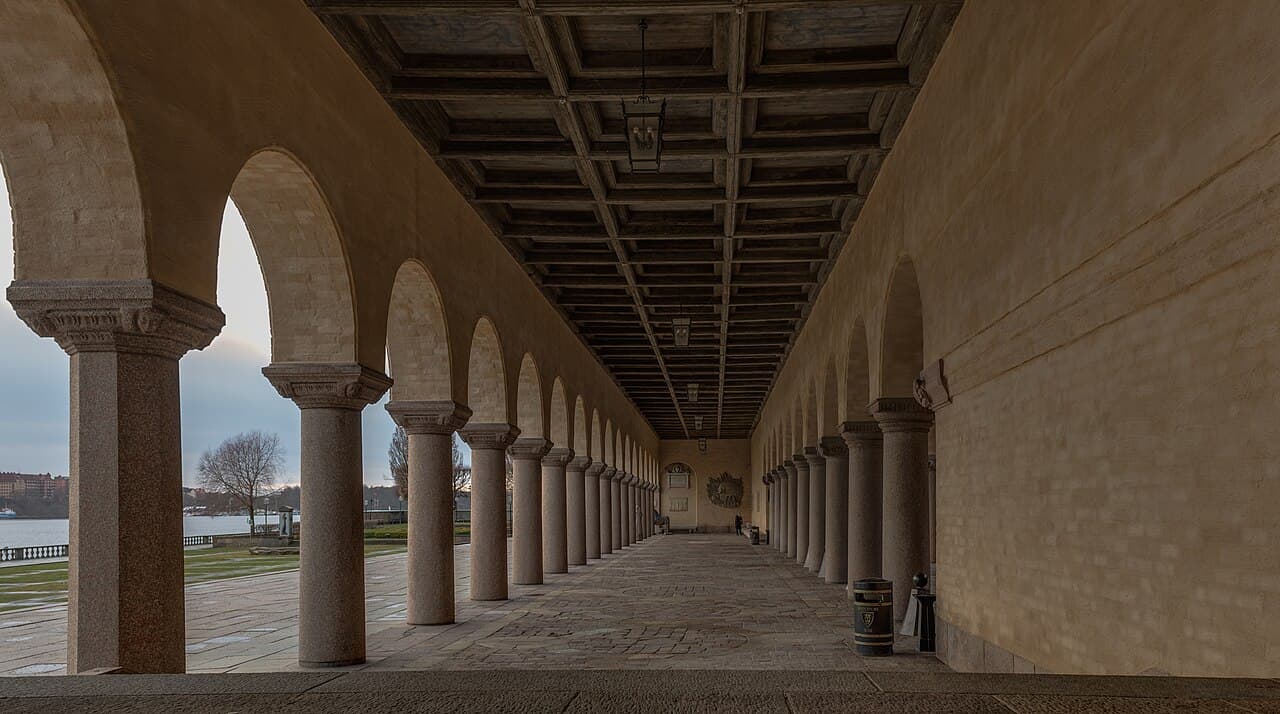
Stockholm City Hall is a working historic building, and its official page separates access to the courtyard, guided tour and tower. A courtyard ramp and interior elevator are listed, while the standard tour route contains stairs that can be bypassed by lift. The page also says the guided tour does not provide seating, a decisive detail for someone who cannot stand through the activity.
The tower is more restrictive: the official description says the elevator covers only part of the ascent, followed by stairs and sloping passages. Do not generalise from ground-level access to tower access. Contact the venue with the exact booking or activity, ask what route applies that day and choose the courtyard or another interior experience when the tower's remaining route does not match your requirements.
- Name the guided tour, courtyard or tower when asking a question.
- Ask about standing duration as well as stairs.
- Do not infer tower access from the presence of an elevator elsewhere.
05
Plan sensory load and communication support
Accessibility is not limited to steps. Historiska notes dark settings and differing sound levels in exhibitions, along with a quiet room and tactile objects. Vasa lists communication boards and hearing loops in specified areas. Nationalmuseum identifies hearing loops in the South and Sculpture Courtyards, plus portable loops for guided tours and a tactile map. These details suggest different planning responses rather than a universal low-sensory promise.
Choose the smallest useful set of galleries, identify a break location and ask whether the particular programme adds amplified sound, crowds or altered lighting. If a hearing loop is essential, confirm that it serves the exact desk, auditorium or tour you will use. Bring the communication format that already works for you; listed venue tools can supplement it but should not be assumed to replace it.
- Identify likely high-load spaces before arrival.
- Confirm hearing support for the exact interaction.
- Plan a genuine exit or quiet break rather than relying on endurance.
06
Check the small constraints that break a plan
A successful route can fail at an ordinary detail. Nationalmuseum publishes information about bag sizes and entry arrangements. Historiska describes the surface between accessible parking and the entrance. Vasa notes that queues can form and gives a booking-office contact for planning questions. City Hall explains the absence of seats during a guided tour. None is dramatic, yet each can determine whether the visit is workable.
Create a short friction list for each selected venue: exterior surface, door, queue, security, bag storage, seating, toilet route and exit. Read the official page for the newest wording, then contact the institution where a missing measurement or procedural detail is decisive. A concise, specific query is more useful than asking whether the venue is accessible in general.
- Include bags and security in the arrival plan.
- Ask how a queue accommodation works in practice.
- Request measurements when a few centimetres would change the answer.
07
Use a two-stage verification routine
Several days before the visit, confirm the venue, chosen activity and transport route. Ask direct questions about any missing critical detail and save the official contact response. On the day, reopen the venue notice and SL journey result. This separates stable planning from the mutable layer of closures, maintenance, room changes and service disruption.
If the answer remains uncertain, reduce dependencies. Choose a museum whose official page describes the necessary facilities more completely, select a flexible activity instead of a timed tower ascent, or keep one nearby substitute. That is not a judgment on anyone's ability; it is a way to prevent an unverified link from controlling the entire day.
- First check: exact needs, venue response and primary route.
- Day-of check: current notices, lift or service status and meeting point.
- Fallback: one option with fewer uncertain transitions.
Useful answers
Reader questions
Is Stockholm City Hall step-free throughout?
Do not assume so. The official page lists a lift for parts of the guided-tour route, but the tower elevator covers only part of the ascent and the remaining route includes stairs and slopes. Ask about the exact activity.
Sources: Stockholm City HallWhich museum publishes sensory information?
The Swedish History Museum specifically notes dark exhibitions, variable sound, tactile objects and a quiet room. Vasa and Nationalmuseum also publish communication and hearing-support details. Confirm the chosen gallery or programme directly.
Sources: Swedish History Museum; Vasa Museum; NationalmuseumCan I borrow a wheelchair at the Vasa Museum?
The museum's current accessibility page says wheelchairs are available to borrow. Availability can change, so contact the museum before relying on one and ask where collection occurs.
Sources: Vasa MuseumWhy does this guide not promise an accessible SL route?
Transport conditions are live, and SL's English accessibility endpoint rendered only a client-side shell in this research fetch. Use that official operator page and the live journey tools in a browser, then recheck critical details near departure.
Sources: SLRead the evidence
Sources and further reading
These sources support the relevant sections above. Plans and comparisons are editorial suggestions. Check operators for current arrangements.
- Transport accessibility ↗SL · Accessed 14 September 2026
The current official endpoint for checking SL accessibility information; the fetched page was a client-side shell and supplies no detailed claims here.
- Accessibility ↗Vasa Museum · Accessed 14 September 2026
Current venue information on lifts, wheelchairs, possible queues, booking-office contact, toilets, hearing loops, assistance dogs and communication boards.
- Accessibility ↗Nationalmuseum · Accessed 14 September 2026
Entry and interior lifts, doors, tactile orientation, loops in the South and Sculpture Courtyards, portable loops for guided tours, toilets, bags and mobility facilities.
- Accessibility ↗Swedish History Museum · Accessed 14 September 2026
Exterior surfaces, lifts, thresholds, seating, quiet room, hearing loops, toilets and sensory conditions.
- Accessibility ↗Stockholm City Hall · Accessed 14 September 2026
Distinct access conditions for the courtyard, guided tour and tower, including lifts, steps and standing.